Monthly Archives: January 2026

How to Build a Diversified Stock Portfolio
Introduction to Diversified Stock Portfolios
A diversified stock portfolio is essential for managing risk and optimizing potential returns in the financial markets. Building such a portfolio involves spreading investments across various assets to reduce exposure to a single stock or market sector. This approach can help mitigate losses during market downturns while capturing growth opportunities. Understanding how to effectively diversify investments can significantly enhance the potential for sustainable financial growth and resilience in the face of market uncertainties.
Understanding Diversification
Diversification is the practice of allocating investments among different financial categories, industries, and other classifications. The primary goal is to reduce the unsystematic risk associated with individual investments. While it’s impossible to eliminate all risk, a well-diversified portfolio can minimize the impact of market volatility. By reducing reliance on any single investment type or sector, investors are better positioned to absorb and adapt to unpredictable changes in market conditions.
Types of Diversification
Steps to Build a Diversified Stock Portfolio
1. Assess Your Risk Tolerance
Understanding your risk tolerance is the first step in building a diversified portfolio. Consider factors such as your investment goals, time horizon, and comfort with market fluctuations. This will influence your asset allocation strategy. For instance, younger investors with a longer investment horizon may have a higher risk tolerance, allowing for more aggressive asset allocation, whereas older investors might prefer more stable, income-generating investments.
2. Asset Allocation
Allocating assets appropriately is crucial to diversification. This process involves determining the percentage of your portfolio to be invested in different asset classes. A balanced approach might include a mix of equities, bonds, and alternative investments. The allocation should be aligned with your financial goals, ensuring that you are not over-exposed to high-risk investments, while keeping an eye on potential returns.
3. Choose Diverse Industry Sectors
Invest in stocks from various industry sectors to mitigate the risk of sector-specific downturns. For example, combine investments in technology, healthcare, consumer goods, and finance. This diversity ensures that poor performance in one sector can be offset by gains in another. Monitoring industry trends and emerging sectors can also provide additional growth opportunities, allowing you to adjust your investments proactively.
4. Consider Geographical Diversification
Including international stocks in your portfolio can protect against domestic economic fluctuations. Investing in emerging markets and established economies can provide access to growth opportunities worldwide. Be aware of currency risks and geopolitical factors when investing internationally. Understanding the economic conditions and political landscape of countries you invest in is vital for effectively managing international investments.
5. Regular Portfolio Review and Rebalancing
Consistently reviewing and rebalancing your portfolio is essential to maintaining diversification. Market conditions can shift asset allocations over time. Regular evaluations ensure that your portfolio aligns with your original investment strategy and risk tolerance. Rebalancing might involve selling assets that have performed well and investing those proceeds in underperforming sectors, in line with your long-term strategy.
Potential Benefits and Challenges of Diversification
While diversification presents numerous benefits, including reduced risk and exposure to a wide array of growth opportunities, it also comes with certain challenges. Managing a diversified portfolio requires ongoing attention and a willingness to adapt to shifting market dynamics. Investors must remain informed about economic conditions, both domestically and internationally, to make timely decisions that align with their financial objectives.
Benefits
The most notable benefit is risk reduction. By spreading investments across various sectors and geographic regions, investors can protect themselves from the full impact of a downturn in any single area. Additionally, diversification increases the potential for long-term growth by including a broad spectrum of asset types and sectors, some of which may perform well even during economic slumps.
Challenges
Diversification requires a comprehensive understanding of different markets and sectors, which can demand significant time and research. Furthermore, the cost of maintaining a diversified portfolio can be higher due to additional trading fees and potential tax implications. It is also important to avoid over-diversification, which can dilute potential returns and make the portfolio more difficult to manage effectively.
Resources and Further Reading
To expand your knowledge on diversification and investment strategies, consider exploring well-regarded financial resources and platforms. Websites such as Investopedia and Morningstar offer comprehensive guides and tools. These resources can provide deeper insights and practical examples of building diversified portfolios. Along with online resources, consulting with financial advisors can offer personalized insights tailored to your specific investment goals.
Conclusion
Building a diversified stock portfolio requires careful planning and continuous management. By spreading investments across various assets, industries, and geographies, investors can better weather market volatility and pursue their long-term financial goals. Regular monitoring and adjustments ensure that your investment strategy remains aligned with changing market dynamics and personal objectives. Successful diversification involves both an understanding of market trends and the ability to adjust strategies in response to evolving financial landscapes, ensuring robust portfolio performance over time.
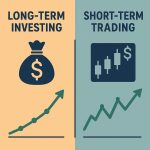
Long-Term Investing vs. Short-Term Trading
Understanding Long-Term Investing
Long-term investing involves holding onto assets for several years, aiming for gradual growth and compound returns over time. This strategy is not just a matter of holding onto investments passively; it requires a keen understanding of the fundamental aspects that drive the value of these investments. Investors look deeply into the company’s financial statements, its track record, market position, management quality, and its strategies for future growth. The focus is largely on assets like stocks and bonds, with an eye on factors such as a company’s financial health, competitive advantages, and overall economic conditions.
Benefits of Long-Term Investing
One of the main advantages of long-term investing is the power of compounding. This is a process where the earnings from an asset — whether in the form of dividends, interest, or other returns—are reinvested to generate their own earnings. Over time, this can result in exponential growth of the initial investment, as earnings continually build upon themselves. Historical data supports this concept, showing that, despite short-term fluctuations, markets generally appreciate in value over extended periods. Thus, long-term investors are often more insulated from the daily ebbs and flows of the market.
Beyond the intrinsic benefits of time and growth, this approach often incurs lower fees. Frequent trading typically results in higher transaction costs, while long-term strategies favor a buy-and-hold philosophy that reduces expenses related to buying and selling assets. Furthermore, tax considerations are crucial, as some jurisdictions offer more favorable capital gains tax rates on assets held over longer durations. This can mean substantial savings and enhanced net returns over time.
Overview of Short-Term Trading
Short-term trading is centered on the frequent buying and selling of financial instruments within a short timeframe, which could range from mere seconds to a few months. This approach requires a different set of skills and strategies compared to long-term investing. Traders often rely on methodologies like day trading, where positions are opened and closed within the same trading day; swing trading, which involves holding onto positions for days or weeks to capitalize on predicted price swings; and scalping, which seeks to profit from minute price changes, often executed numerous times throughout the day.
Benefits of Short-Term Trading
The primary allure of short-term trading is the potential for rapid profits, particularly in volatile markets where prices can change quickly and significantly. Traders aim to identify and exploit these small price fluctuations, leveraging tools of technical analysis, market indicators, and charts to inform their trading decisions. These tools are pivotal in understanding market trends and determining the optimal points for entering and exiting trades.
In addition to potential profits, short-term trading offers the advantage of liquidity. Traders maintain control to quickly buy and sell assets, thereby freeing up capital for new opportunities almost immediately. This agility offers the flexibility to adapt to evolving market conditions, responding swiftly to global economic news, company announcements, or any event that might influence market movements. This can be especially advantageous in mitigating risks associated with unfavorable positions.
Comparing Long-Term and Short-Term Strategies
The choice between adopting a long-term investment strategy or engaging in short-term trading largely depends on personal financial goals, the level of risk one is prepared to accept, and the time available to dedicate to investment activities. Each approach comes with its unique set of attributes that may appeal differently depending on the investor’s objectives and resources.
Risk Considerations
Long-term investing is generally seen as a more conservative approach. By focusing on sustained market trends over several years, investors may effectively manage risks associated with short-term market volatility. This doesn’t mean long-term investments are risk-free but rather that they are potentially less influenced by temporary market fluctuations. On the other hand, short-term trading is inherently riskier due to its reliance on speculative trading. The fast-paced nature of short-term trades, coupled with market volatility, requires traders to be adept at forecasting price movements and to manage risks effectively through techniques like stop-loss orders.
Time Commitment
Executing short-term trading successfully demands significant time and attention. Traders need to stay abreast of real-time market data, rapidly changing events, and continuous analysis of market trends. This can be a full-time endeavor, considering the effort required to strategize and execute trades effectively. Conversely, long-term investing generally involves less frequent monitoring. Investors periodically review their portfolios to ensure alignment with financial goals, considering periodic adjustments based on fundamental analysis rather than the day-to-day movements of the market.
Final Thoughts
Both long-term investing and short-term trading offer distinct advantages and challenges. Investors who prefer a less hands-on approach and prioritize steady, compound growth over time might find long-term strategies more suitable. This approach aligns with those who appreciate the stability offered by fundamentally strong investments. Meanwhile, individuals who thrive on active market participation and are adept at utilizing technical analysis may find the dynamic nature of short-term trading more attractive. This strategy can provide the thrill of rapid trading, with corresponding rewards and risks.
Additional Resources
For those seeking deeper insights into investing strategies, numerous avenues offer valuable information. Resources like Investopedia provide comprehensive guides and articles tailored to an array of investment strategies, offering knowledge that spans from beginner tips to advanced analysis. Additionally, education through research from reputable financial institutions, consulting with financial advisors, and continuous learning from market trends can further illuminate the right path for one’s financial journey. Each step towards understanding these strategies equips investors with the tools necessary to make informed decisions, aligned with personal financial aspirations.

How to Read a Stock Chart: A Beginner’s Guide
Understanding the Basics of Stock Charts
A stock chart serves as a crucial analytical tool that graphically represents a stock’s performance over a designated time period. For investors and traders, stock charts are invaluable for delving into trends, forecasting future behavior, and making sound investment choices. These charts encapsulate a stock’s price history, allowing for insightful examination of how prices fluctuate over time.
Types of Stock Charts
Investors and traders utilize various types of stock charts, each offering unique insights into market behavior:
Line Charts: Primarily focused on illustrating the closing prices of a stock over time, line charts provide a straightforward depiction of price trends. They are exceedingly useful for those seeking a simplistic and clean representation of a stock’s trajectory, particularly when the goal is to discern general patterns in price movement without being distracted by intra-period details.
Bar Charts: More informative than their line chart counterparts, bar charts furnish a detailed breakdown by showcasing the opening, closing, high, and low prices within a given timeframe. Each component—whether it be the top, bottom, or sides of the bar—delivers critical information about price fluctuations, enabling investors to gain a comprehensive perspective on daily or weekly trading dynamics.
Candlestick Charts: Similar in data provision to bar charts, candlestick charts elevate readability through the use of ‘candles’—visual elements that succinctly capture the opening, closing, high, and low prices. The color and shape of each candle convey trading patterns over specific intervals, making them particularly favored by those seeking daily insights into market behavior.
Key Components of a Stock Chart
A thorough grasp of stock charts necessitates an understanding of their fundamental components:
Price Axis: Situated vertically along the chart, the price axis delineates the range of security prices over the relevant period, allowing investors to gauge how current prices stack up against historical ranges.
Time Axis: Placed horizontally at the base, the time axis marks out the intervals in which stock prices are recorded, be it over days, weeks, or months, aiding investors in contextualizing price movements within specific temporal frameworks.
Volume Bars: Positioned below the main price chart, volume bars graphically communicate the quantity of shares traded within a set period. High trading volumes can signify strong interest or participation in a stock, often enhancing the understanding of broader market trends.
Trend Lines: Trend lines are strategic lines drawn to connect several price points, providing visual insight into the general direction of price movement. They are instrumental in identifying whether a stock is following an upward, downward, or sideways trajectory.
Analyzing Stock Chart Patterns
Chart patterns emerge from the natural oscillations of stock prices and are vital for predicting future market movements:
Triangles: Recognized for their indication of a phase of consolidation leading to a breakout, triangle patterns can manifest as ascending, descending, or symmetrical. They serve as harbingers of potential price direction changes following a period of relative equilibrium.
Head and Shoulders: This classic pattern signals potential reversals in market trends. Consisting of three peaks—the central peak (head) being higher than the two surrounding ones (shoulders)—it often indicates an impending shift in trend direction.
Double Tops and Bottoms: Characterized by their repetitive price movements, these patterns suggest reversal points. A double top indicates a probable downturn after two peaks at similar price levels, while a double bottom suggests an upward movement following two low points.
Moving Averages
Stock charts often incorporate moving averages to reduce short-term volatility and underline longer-term trends:
Simple Moving Average (SMA): Calculated as the unweighted average of previous stock prices over a defined number of periods, SMA provides a straightforward method to assess an average price trend over time.
Exponential Moving Average (EMA): The EMA enhances the weighting of recent prices, enabling quicker responses to current price changes compared to the SMA, making it a preferred choice for those needing more prompt trend analysis.
Indicators and Oscillators
For more granular insights, traders often rely on a suite of indicators and oscillators:
Relative Strength Index (RSI): This momentum oscillator evaluates the speed and magnitude of recent price changes to identify overbought or oversold conditions. An RSI reading above 70 may signify overbought conditions, while a score below 30 can indicate oversold conditions.
Moving Average Convergence Divergence (MACD): MACD reflects the relationship between two moving averages (typically, the EMA) of a stock’s price, presenting a visual and numerical indicator to determine trend momentum and potential reversals.
For those seeking a more comprehensive exploration of various stock chart types and their applications, a thorough reference such as the Investopedia resource may prove beneficial.
Conclusion
Mastering the interpretation of stock charts is a fundamental skill for anyone pursuing success in the investment arena. By meticulously analyzing the various chart components and recognizing key patterns, investors are better equipped to make strategic decisions that align with market dynamics. Although honing this skill set requires time and practice, the foundational concepts outlined in this guide offer a valuable starting point for beginners. As proficiency develops, investors can explore more intricate charting methods and tailored analytical strategies to refine their market acumen further.

Understanding Stock Tickers and Quotes
Introduction to Stock Tickers and Quotes
Stock tickers and quotes are integral elements of the financial markets, providing indispensable information that allows investors to evaluate securities accurately. These tools are crucial for traders, brokers, and investors as they navigate the complex environment of stock markets, understanding current trends, and making informed decisions concerning their portfolios.
Understanding Stock Tickers
A stock ticker is a distinct series of letters representing a publicly traded company on a particular stock exchange. These symbols are pivotal in trading systems for identifying stocks, facilitating efficient communication, and executing trades seamlessly. For instance, Apple Inc. is denoted by the ticker AAPL on the NASDAQ stock exchange. Stock exchanges assign these tickers, ensuring that they are unique to their listings, though they might differ from one exchange to another for the same company.
Purpose of Stock Tickers
In the dynamic world of financial trading, stock tickers serve several fundamental purposes that bolster the efficiency and clarity of stock exchange operations:
Identification: Stock tickers uniquely identify a company’s stock. This identification is crucial in maintaining transparency and avoiding any confusion during trading. Without these unique identifiers, differentiating between companies with similar names or avoiding errors during trading would be challenging.
Facilitating Trades: Tickers streamline the communication among traders and brokers, facilitating quicker and more efficient execution of trades. In a fast-paced trading environment, where delay can mean financial loss, this facilitation is invaluable.
Stock Quotes Explained
A stock quote is an amalgamation of important financial data, providing traders and investors with the current pricing information on securities. Understanding each component of a stock quote is vital for making accurate trading decisions.
Components of a Stock Quote
The key components of a stock quote can significantly impact trading decisions, capturing multiple facets of the stock’s performance:
Last Price: The last price represents the most recent trade price for the stock. It provides an immediate sense of the stock’s current market valuation, allowing traders to benchmark against historical and desired price levels.
Bid and Ask: These figures indicate the highest price a buyer is willing to pay (bid) and the lowest price a seller is prepared to accept (ask). The difference, known as the spread, can symbolize market liquidity and transaction costs essential for trading strategies.
Day’s Range: This parameter tracks the stock’s highest and lowest prices over the trading day. This range offers insights into the stock’s volatility and potential price movement, which are crucial for assessing trading risks.
Volume: Trading volume refers to the total shares exchanged during a specific period. High volume can signal strong interest or movement in the stock, serving as a useful signal for market trends and potential price shifts.
The Role of Stock Exchanges
Stock exchanges like the New York Stock Exchange (NYSE) and NASDAQ are instrumental in supplying the necessary infrastructure for stock tickers and quotes, central to financial market operations. These exchanges bear the responsibility for the accuracy of stock tickers and quotes, ensuring they are timely and precise.
Real-Time vs. Delayed Quotes
Understanding the difference between real-time and delayed quotes is critical for multiple investor types.
Real-time quotes deliver instantaneous pricing data, a necessity for day traders and active investors who rely on up-to-the-second information to make rapid trading decisions. Conversely, delayed quotes are typically lagged by about 15 to 20 minutes. Such quotes suffice for long-term investors who do not engage in frequent trades and therefore do not require immediate updates.
Impact of Technological Advances on Stock Quotes
Technology has revolutionized how stock quotes are delivered and accessed in modern financial markets. Various platforms utilize technology to provide real-time quotes, heralding a new era of accessibility, speed, and accuracy. This technological progress enhances trading efficiency and opens new layers of market analysis and strategy.
Historical Evolution of Stock Quotes
The method by which stock quotes are delivered has evolved significantly. In earlier days, stock prices were communicated verbally or through ticker tape machines, leading to delays and inefficiencies. Today, advanced software ensures automated dissemination of quotes globally, ensuring that disparity in information is minimized and transparency is maintained.
Conclusion
Comprehending stock tickers and quotes remains fundamental to anyone involved in trading or investing in financial markets. They offer vital insights into the financial performance of companies and help design informed trading strategies. Reliable access to comprehensive stock quotes and a thorough understanding of using tickers can significantly enhance trading experiences and improve investment outcomes. By continually leveraging technology and deepening their understanding of these financial tools, traders and investors can optimally navigate the ever-evolving stock market landscape, adapting to its nuances for greater profitability and success.