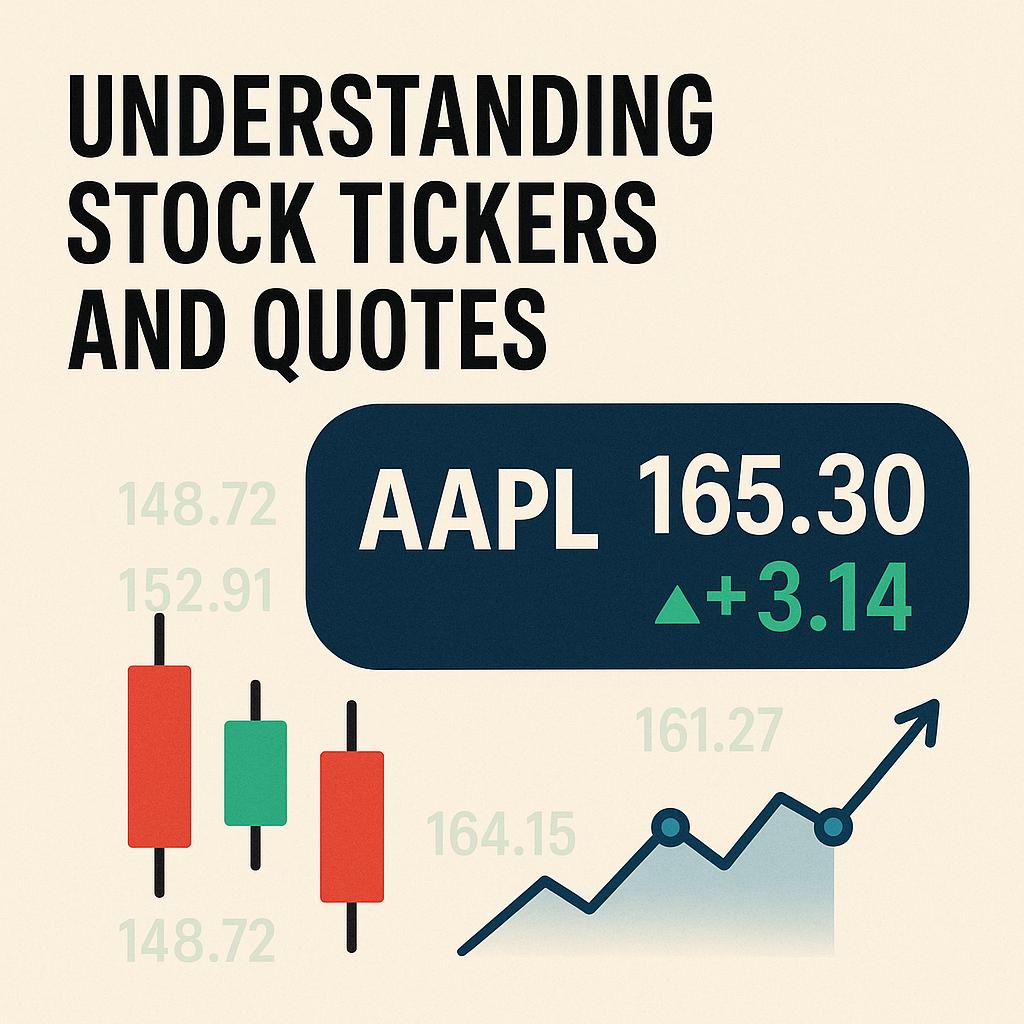
Understanding Stock Tickers and Quotes
Introduction to Stock Tickers and Quotes
Stock tickers and quotes are integral elements of the financial markets, providing indispensable information that allows investors to evaluate securities accurately. These tools are crucial for traders, brokers, and investors as they navigate the complex environment of stock markets, understanding current trends, and making informed decisions concerning their portfolios.
Understanding Stock Tickers
A stock ticker is a distinct series of letters representing a publicly traded company on a particular stock exchange. These symbols are pivotal in trading systems for identifying stocks, facilitating efficient communication, and executing trades seamlessly. For instance, Apple Inc. is denoted by the ticker AAPL on the NASDAQ stock exchange. Stock exchanges assign these tickers, ensuring that they are unique to their listings, though they might differ from one exchange to another for the same company.
Purpose of Stock Tickers
In the dynamic world of financial trading, stock tickers serve several fundamental purposes that bolster the efficiency and clarity of stock exchange operations:
Identification: Stock tickers uniquely identify a company’s stock. This identification is crucial in maintaining transparency and avoiding any confusion during trading. Without these unique identifiers, differentiating between companies with similar names or avoiding errors during trading would be challenging.
Facilitating Trades: Tickers streamline the communication among traders and brokers, facilitating quicker and more efficient execution of trades. In a fast-paced trading environment, where delay can mean financial loss, this facilitation is invaluable.
Stock Quotes Explained
A stock quote is an amalgamation of important financial data, providing traders and investors with the current pricing information on securities. Understanding each component of a stock quote is vital for making accurate trading decisions.
Components of a Stock Quote
The key components of a stock quote can significantly impact trading decisions, capturing multiple facets of the stock’s performance:
Last Price: The last price represents the most recent trade price for the stock. It provides an immediate sense of the stock’s current market valuation, allowing traders to benchmark against historical and desired price levels.
Bid and Ask: These figures indicate the highest price a buyer is willing to pay (bid) and the lowest price a seller is prepared to accept (ask). The difference, known as the spread, can symbolize market liquidity and transaction costs essential for trading strategies.
Day’s Range: This parameter tracks the stock’s highest and lowest prices over the trading day. This range offers insights into the stock’s volatility and potential price movement, which are crucial for assessing trading risks.
Volume: Trading volume refers to the total shares exchanged during a specific period. High volume can signal strong interest or movement in the stock, serving as a useful signal for market trends and potential price shifts.
The Role of Stock Exchanges
Stock exchanges like the New York Stock Exchange (NYSE) and NASDAQ are instrumental in supplying the necessary infrastructure for stock tickers and quotes, central to financial market operations. These exchanges bear the responsibility for the accuracy of stock tickers and quotes, ensuring they are timely and precise.
Real-Time vs. Delayed Quotes
Understanding the difference between real-time and delayed quotes is critical for multiple investor types.
Real-time quotes deliver instantaneous pricing data, a necessity for day traders and active investors who rely on up-to-the-second information to make rapid trading decisions. Conversely, delayed quotes are typically lagged by about 15 to 20 minutes. Such quotes suffice for long-term investors who do not engage in frequent trades and therefore do not require immediate updates.
Impact of Technological Advances on Stock Quotes
Technology has revolutionized how stock quotes are delivered and accessed in modern financial markets. Various platforms utilize technology to provide real-time quotes, heralding a new era of accessibility, speed, and accuracy. This technological progress enhances trading efficiency and opens new layers of market analysis and strategy.
Historical Evolution of Stock Quotes
The method by which stock quotes are delivered has evolved significantly. In earlier days, stock prices were communicated verbally or through ticker tape machines, leading to delays and inefficiencies. Today, advanced software ensures automated dissemination of quotes globally, ensuring that disparity in information is minimized and transparency is maintained.
Conclusion
Comprehending stock tickers and quotes remains fundamental to anyone involved in trading or investing in financial markets. They offer vital insights into the financial performance of companies and help design informed trading strategies. Reliable access to comprehensive stock quotes and a thorough understanding of using tickers can significantly enhance trading experiences and improve investment outcomes. By continually leveraging technology and deepening their understanding of these financial tools, traders and investors can optimally navigate the ever-evolving stock market landscape, adapting to its nuances for greater profitability and success.
This article was last updated on: January 4, 2026