Photographs From Iraq: September and October, 2006

Dead. October 2, Taji. Raymond S. Armijo. He was 22. Multiply that by 105 for October alone.
Iraq War Photography: October, 2006
Back to main indexPrevious Month.
Photographs From Iraq: September and October, 2006.

A man shows the damage to the front door of his home inflicted by a U.S. airstrike in
Baghdad on the 25th. The Americans were on a fishing expedition for a "death squad
leader",
and killed
ten
people ("militia members") in the Sadr City slumland in the process of failing
to catch
him.

Same day, an American transport truck was hit on a highway in Baghdad. The military
will almost never admit when specific actions by the resistance have caused
casualties. News
organizations stick their heads in the sand and write that "there were no immediate
reports
on casualties" in captions for pictures such as this.

Smoke rises from Baghdad's Haifa Street in central Baghdad, Iraq, Wednesday, Oct.
25,
2006. Several mortar rounds were launched at the fortified Green Zone where U.S.
forces are
headquartered, Wednesday and U.S. jets and helicopter gunships fired back and heavy
clouds
of black smoke could be seen rising from the area around Haifa Street, just blocks
from the
Green Zone that houses the U.S. and British embassies. (AP/Dusan Vranic) Haifa
street
used to be a major hotbed of resistance activity; the U.S. military declared it
"secured" in
2005.

A man cries over the body of his son outside a hospital morgue in Baquba, 65 km (40
miles) northeast of Baghdad, October 25, 2006. His son was one of two civilians
killed in
crossfire during clashes between insurgents and soldiers, morgue workers said.
REUTERS/Helmiy al-Azawi

Residents look for survivors in a house hit in a US air strike early morning
Friday Oct.
27, 2006, in Ramadi, 115 kilometers (70 miles) west of Baghdad. The airstrike that
killed
three and wounded 3 more followed a clash between US troops and gunmen, according to
witnesses. -AP

Sunni mujahideen released a 28-minute video recently - this is a grab from a scene
depicting
the training of field snipers.

A man wounded in a rocket attack in Baghdad on the 28th. There are literally a dozen
pictures like this from Iraq every single day - how much is not captured by cameras
will
never be known.

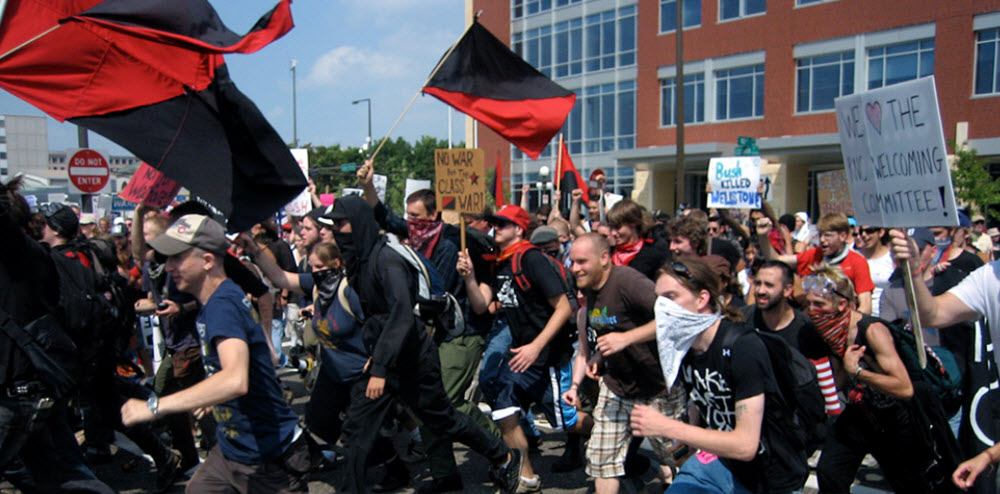
Residents attend a rally in Baghdad's Sadr city October 29, 2006. Thousands of
people
took to the streets in Sadr City on Saturday to protest against a security clampdown
imposed
on the city for the fifth day running in a hunt for a U.S. soldier who went missing in
Baghdad last week. REUTERS/Kareem Raheem. Keep in mind that Baghdad has been
under
police-state conditions by any standard since roughly the summer of 2003 - so any
additional
"clampdown" must be totally over the top. Judging from another photo caption, the
U.S.
military totally closed off Sadr City (1.1 million people) from the world. We don't
really
know, of course, since no one bothers to write (or print) a decent article on this
subject.

October 29, Baghdad. Draw your own conclusions, but here's a hint: dozens of Iraqi
children
have died in situations exactly like this.

Medics treat a wounded U.S. soldier in the 'Green Zone' in Baghdad, October 30.

A bomb planted in a market in Sadr City killed at least 31 people and injured dozens
more on
October 30.

A U.S. military worker holds the hand of a wounded U.S. soldier inside a U.S.
military
hospital at the fortified Green Zone in Baghdad, October 30, 2006. (Thaier
al-Sudani/Reuters)

People in Sadr City celebrate on October 31 after Iraqi PM Nuri al-Maliki forced the
U.S.
military to abandon its lockdown of the city, which is part of Baghdad. He publicly
set a 5
P.M. deadline for the occupiers to leave the streets - and they had no choice but to
obey,
despite the fact that the Prime Minister of Iraq has no legal authority over the
occupiers of his
country .

More people celebrating the landmark event. Muktada al-Sadr had called for a
general strike
in Sadr City (named for his father) Tuesday, all of Baghdad Wednesday, and all of Iraq
Thursday if the siege, which besides being brutally oppressive was causing the
prices of
goods in the city to skyrocket, did not end.

A relative comforts an Iraqi child who survived a wedding party bombing, in al-Sadr
hospital
in Baghdad's Shiite enclave of Sadr City Tuesday Oct. 31 2006. A suicide car bomber
struck a
wedding party in Baghdad on Tuesday afternoon, killing 11 people, including four
children,
and wounding 12 others, police reported. (AP/Karim Kadim)

Juan Valdez-Castillo, a Marine, was shot through the arm and torso by a sniper of
the Iraqi
resistance in Karmah on October 31. A NYT journo was along for the ride and
witnessed the
incident.

Relative places dead child's body in a coffin, in al-Sadr hospital in Shiite
enclave of
Sadr City, Iraq, Wednesday Nov. 1, 2006 . A suicide car bomber struck a wedding
party in
Baghdad on Tuesday afternoon, killing 23 people, including nine children, and
wounding 19
others, police reported. (AP Photo/Karim Kadim)

Women 'wait for their relatives to be released from prison in Baghdad' on November
1. No
further information was given, but see next pictures.

Iraqi detainee holds up the Quran as he is released from the US military custody in
Baghdad Wednesday Nov. 1, 2006. Some 150 detainees were released today. (AP/Khalid
Mohammed)

Mother of 22-year old Wessam Sayed holds his framed photograph as a group of
prisoners
was to be released from the US military custody in Baghdad Wednesday Nov. 1, 2006.
Sayed,
who has been imprisoned for two-years, was not among the some 150 detainees released
today.
(AP/Khalid Mohammed)

"Detainees" who were later released.

This image provided by the US Marine Corps Wednesday Nov. 1, 2006 shows US
Marines and
sailors from the California-based Regimental Combat Team 7 meeting film action star
Chuck
Norris Oct. 31, 2006, at Al Asad air base in Iraqs Al Anbar Province...

Residents look at a building damaged in a U.S. air strike in Ramadi, 100 km (60
miles)
west of Baghdad, November 1, 2006. U.S. planes bombed a building in the restive city
of
Ramadi at dawn on Wednesday, killing at least two civilians and wounding four
others, local
residents said. REUTERS/Ali Mashhadani

Steven D. Green is in jail in North Carolina, charged with murder and rape. He and
other
soldiers from his squad in the 101st Airborne Division broke into an Iraqi home near
Mahmudiyah last year, raped and murdered a 14 year-old girl, set her body on fire, and
murdered her father, mother, and six year-old sister. The victims were Abeer Kassem
Hamza
Al-Janabi, Hadeel Kassem Hamza Al-Janabi, Kassem Hamza Rachid Al-Janabi and Fakhriya
Taha
Mohsine Al-Janabi. Green and some of his murderous rapist friends face the death
penalty;
but the people who are, at the end of the day, responsible for this happening will
never
receive the slightest punishment. In response to the murder of the al-Janabi
family, the
Iraqi resistance in the Mahmudiyah area abducted two American soldiers and tortured
them to
death. The two may have been in the same squad as Green. This is what war does to
people.

November 2, Baqouba. No further information.

Feda Mohammed, an electrician with Bibimahro power plant, cuts old power lines to
improve
the electricity in a residential neighborhood November 2, 2006 in Kabul,
Afghanistan. Almost
five years after the fall of the Taliban, most Afghans still don't have sufficient
power
while many have none. The demand continues to increase, but the supply is not near
enough in
a city that has grown from about 500,000 to around 4 million people. According to
officials
from the Department of Power, the average residential neighborhood in the capitol
city only
gets 12-15 hours of electricity per week. While Afghans complain about the constant
problems
of electricity, most still don't pay for it. The importation of power from countries
like
Uzbekistan is years behind schedule. United States Agency for International
Development
(USAID) has just stopped its costly fuel subsidies this month that was funding the
expensive, old diesel generators, costing millions per year.

On November 3, fifty-six bodies were found in Baghdad - tortured to death. All were
men
between 20 and 45 years of age, and, as they were taken to the holy city of Karbala
for
burial (pictured), one can assume they were Shia.

Same day. PFI requests that people keep in mind that John Kerry and practically
every other
politician in the Democratic Party always have and still do support the war on and
occupation of Iraq.

PESHAWAR, PAKISTAN - NOVEMBER 03: Several thousand mostly pro-Taliban protesters
marched to
denounce the October 30, 2006 air strike on an Islamic religious school, or
madrassa, in the
Bajaur district of Pakistan's tribal belt bordering Afghanistan, killing 82 people.
The
Pakistani government said it destroyed the school because it was a Taliban and Al
Qaeda
terrorist training facility. Critics of the strike said that an American plane fired
missiles at the school and that the dead were just students. (John Moore/Getty Images)
News:
NATO Peacekeepers Masscre Dozens More Afghans.
Note that only the U.S. military
has the
equipment for "airstrikes" in Afghanistan.
The Largest
Private Army in the World: At least 48,000 mercenaries now in Iraq. In
perspective:
there are 21,000 British mercenaries in Iraq - but only 7,200 British soldiers.
Also buried
in this article: Brits abandoning their consulate in Basra due to "increasing rocket
and
mortar attacks."
The Office of the Inspector General of Iraq, the only thing keeping war-profiteer
contractors such as Halliburton even marginally honest as they "rebuilt" the
country, is
quietly being shut
down. It
had been run by a Republican lawyer.
"Defense" company stocks have more than doubled since the Iraq
invasion.
This little fact is buried in an article which notes that, on the fear of a Democrat
election victory, the stocks have dropped - 4 %.
Israelis leave Beit Hanoun, leaving behind a trail of death
Photographs From Iraq Archive