|

UNION AWARENESS TRAINING FOR BORDERS MANAGERS
CONFIDENTIAL PROPERTY OF BORDERS, INC.
Prepared by Anne Kubek, Human Resources September, 1996
Borders' Position On Unions
Our Management Philosophy Statement Borders is committed to maintaining an
employee relations climate which promotes maximum personal development and achievement.
We are dedicated to treating our employees fairly and providing good working
conditions, com petitive wages and benefits, and above all, the respect that
each employe e deserves . We also believe in open and direct communication which
permits the resolution of employee problems in an atmosphere of mutual trust,
responsive to individual circumstances. The company shall continue its e fforts
to enhance these objectives.
We do not believe that our employees would benefit from outside intervention
into these relations, but firmly believe that the best interests of our employees
can be served without third-party interference, particularly a union. We greatly
value our ability to work with employees individually without their being subjected
to burdensome union costs, complicated rules and costly work stoppages.
We will vigorously strive to preserve an environment which nurtures the fulfillment
of these goals.
Union Activity at Borders
Why is Borders Experiencing So Much Union Activity?
Unions have made a major effort this year to try to organize many businesses,
especially those in the service industry. Union membership has declined
steadily in the last ten years, especially due to downsizing and layoffs
in the many industries. Unions are businesses which survive solely on
the dues of their members. In order to improve and stabilize their financial
situation, unions need to increase the number of dues-paying members.
Unions typically look at three things when deciding whether or not to target
a company for a union drive.
1. what types of employees do they have? Full-time or part-time? Educated?
Will they have a philosophical bent towards unionization? Are they liberal or
conservative?
2. is the company undergoing explosive growth? if so, there are likely to
be problems within the organization associated with change and growth. The seeds
of discontent may have been planted by the growth.
3. what is the makeup of the Board of Directors? do these people run/own /work
for companies that have unions or do they support unions?
Borders is a national corporation with a large pool of full-time employees
who generally tend to be a little left of center. We are a very high growth
company which has undergone a great deal of change in the last two years. Change
is unsettling. Some of our employees look to a union to try to control the changes
in the company. Unions likely look at us as an important business to organize
- one with great potential for them for years to come. Even companies with the
most enlightened personnel policies will face problems with unionization.
Summary of Union Activity To-Date
Philadelphia & the IWW
In February of 1996, a number of the employees of store #21 in Center City,
Philadelphia, signed union authorization cards and submitted a petition
to the National Labor Relations Board (NLRB) in an attempt to unionize
the store with the Industrial Workers of the World (IWW). The employees of
the store had a variety of concerns which they hoped to address via
unionization (starting wages, raises, benefits, title base considerations,
control of co-op, store conditions, employee involvement in the decision making
process within the store). During a six week campaign, Dave Stewart
(GM) and Anne Kubek (VP of HR) met with the employees in small group meetings
to discuss their concerns and inform them about union issues (collective
bargaining, strikes, the IWW, Borders' position on unions, etc.) as
well as to clear up some misunderstandings which the staff had (i.e.
issues relating to inventory, how books are bought, RPL's, co-op, etc.).
The employees of the store voted not to be represented by the IWW in a 25
-20 vote on March 27, 1996. They cannot attempt another union drive for one
year from the election date.
Following the election, some members of the organizing committee seemed to
have difficulty accepting the loss of the election and continued to try to encourage
employees of other Borders stores to organize.
On June 15, 1996, an employee of store #21 separated from the company for
a performance based issue. She issued a memo to the staff which was not entirely
factually correct but she did indicate that she felt she was separated for not
being willing to follow store policy. At no point in this memo did she state
that she felt she was separated for union activity. A few days later, members
of the IWW started picketing Borders stores nationwide to protest her separation,
claiming that it was tied to her role as a strong proponent of the union. This
is false. She was separated for cause. She waited 45 days before filing an unfair
labor charge with the NLRB.
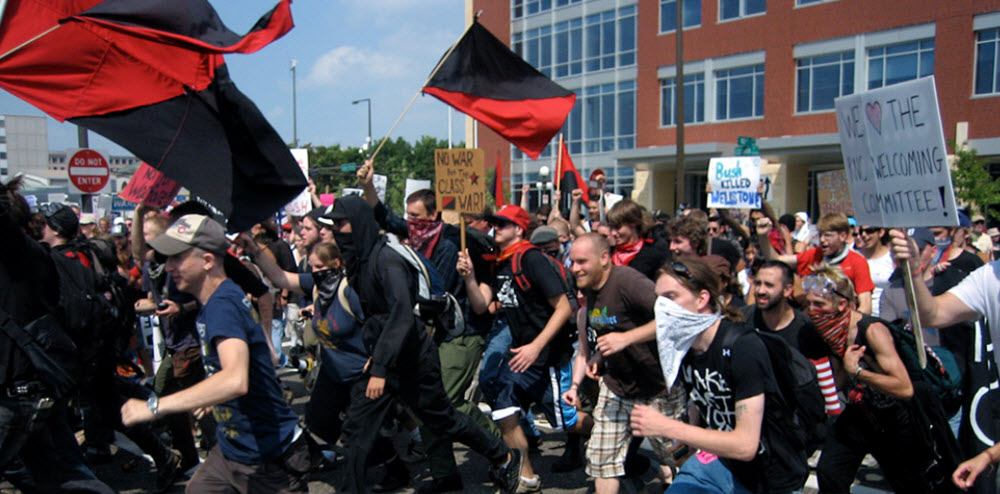
The IWW has distributed leaflets inside and outside of several stores including
Boston, San Francisco, Towson, LA, Portland OR, Santa Monica, Chicago, Santa
Barbara, Honolulu, Seattle, Madison, Novi, Minneapolis, Philadelphia, White
Plains, Utica, Ann Arbor and others. Additionally, members of the IWW have protested
outside of Waldens stores in Utah and NYC.
Ann Arbor and the UFCW
In June of 1996, we learned that a number of employees at store #01 in
Ann Arbor, MI had signed union authorization cards with the United Food and
Commercial Workers (UFCW). We met with the employees in small group
meetings to discuss the legal aspects of signing a union authorization card,
the implications of unionization on the workplace (especially at Borders)
, and the various staff concerns (benefits, wages, changes in the company).
We also hosted an all-staff meeting to discuss the various issues.
Rich Flanagan (President of Borders) and I attended this meeting to answer
employee questions on wages, benefits, changes in the company, the latest
employee handbook, etc. =
The employees submitted signed union authorization cards to the NLRB on July
3, 1996. An election was set for August 14, 1996. When the managers began talking
with the staff at the store, it became apparent that at least some of the staff
signed union authorization cards without truly understanding their significance.
They were told by union organizers that signing the card was merely a "request
for more information." Some were told that they had to sign a card to vote.
Others signed because they were frustrated with the company and wanted to make
a statement, but did not necessarily want a union to represent them.
We continued to meet with the employees of #01 to discuss the UFCW, their
by-laws and constitution, duties and obligations of union membership, the finances
of the UFCW, the effect of unionization on the store, collective bargaining,
and the concerns raised by the staff.
Elections are by secret ballot. The voting unit (the group of employees eligible
to vote in the election) was defined in both Philadelphia and Ann Arbor as all
the employees who were on the payroll when the petition was filed except for
the General Manager and Assistant Managers. To win the election, the union would
need to garner 50% + 1 of the votes cast. There were 71 eligible voters in #01.
If everyone voted, 36 votes would win the election for either side. However,
if only 34 employees chose to vote, then 18 votes would win the election. Regardless
of how many employees vote, all employees would be represented by the union
if the union were to win the election.
On August 11, we held a final pre-election all store meeting. There was no
agenda or planned speeches. Attendance at the meeting was voluntary and we had
told the employees that everyone would have the chance to speak if they wanted
to do so. We told them that this would be their chance to have their final say,
regardless of their stance on the issue. About one half of the staff attended
the meeting. Shortly after Joe Gable (General Manager) opened the meeting, one
of the union organizers stood up to read a statement. The statement articulated
the four main reasons they had organized in the first place (because they felt
they had no voice regarding wages, benefits or working conditions; because their
wages are too low; because the health care plan was changed; because the vacation
benefit was changed). It went on to accuse the company of conducting a "scurrilous
anti-union campaign designed to obfuscate the real issues." They accused "management"
of preferring to "run the business as they see fit with a compliant, passive,
and non-complaining workforce." These accusations are without merit.
They also complained about the fact that employees posted "anonymous and forged
materials containing a diatribe against the Union." This is in reference to
one incident where an anti-union employee took a union document and re-wrote
it as a parody. Joe removed this from the break room shortly after it was posted.
While it is unfortunate that this happened, this was not unlike the unsigned
anonymous materials posted by pro-union factions. The union organizing committee's
perspective on this one incident is to say that it is "indicative of the desperation
that is driving anti-union forces at Borders."
Finally, the union organizing committee stated that for all of the above reasons,
they had concluded that a "free, fair and informed election is not now possible"
and that therefore they had decided to postpone the election by withdrawing
the petition. Withdrawing the petition allows them to come back in six months
and try to organize again, rather than waiting a full year if they had lost
the election. They would need to gather enough cards again and submit another
petition.
At the meeting, the union organizers verbally indicated that they had withdrawn
the petition because they had originally had the support of 70% of the staff
but now felt that they did not represent a clear majority and would not feel
comfortable with a union in the store which only represent ed slightly more
than half of the workforce at the store. This certainly seems disingenuous.
If the union thought that they could have won this election, they never would
have withdrawn the petition. Our last estimates indicated that we probably would
have won the election 2 to 1. They also stated that they felt that the organizing
committee was too small and was unable to marshal the sorts of resources that
the company had. I take issue with this statement. The UFCW is a large multi-million
dollar business which has employees whose sole job is to help employees organize.
Lack of support by this union was not due to a lack of resources, but perhaps
lack of effort on the part of the UFCW local in this case. We had the benefit
of legal counsel of course, as does the UFCW.
When the organizing committee announced their decision to cancel the election,
there was a great deal of anger on the part of many of the employees present
who were frustrated at having the opportunity to vote taken away without their
consent. The union organizing committee had explained that one of the reasons
that they had attempted to organize was because there was "no democracy in the
workplace." The other employees pointed out that by having a small group make
the decision to withdraw the petition, they had removed democracy from the union
drive.
At the end of the meeting, the employees were attempting to find some common
ground and ways to move forward together to try to work with the company to
address their issues and concerns. They clearly wanted to find some way to put
the divisiveness behind them and work towards regaining the cohesiveness that
is characteristic of Borders staffs. On an emotional level, there is relief
and certainly some shock at going through a difficult situation without the
decisive closure of the vote.
Lincoln Park and the UFCW
On August 21, we received notice from the UFCW demanding recognition without
election in Lincoln Park (#101). We declined to recognize the union
and so the UFCW submitted their petition. The election will be held in
October of 1996. The base issues in this store appear to be wages and staff
levels. This store is different in profile than the first two in that it
has been open less than one year.
Other Stores
We have heard of various levels of interest in other stores - the IWW and
the Teamsters in Indianapolis (#16), UFCW in Albany (#35), rumblings of
interest in San Francisco (#57) and Michigan Ave (#58). Employees have been
approached by union organizers in Boston (#120), Farmington CT (#55) and
Coconut Grove (#121) and probably in other stores as well.
Communication
What Can Be Done to Avoid Unionization in My Store?
The best thing you can do as a manager to avoid unions in your store is the
same thing we would expect you to be doing anyway - manage a well-run
store with open and honest communication taking place everyday. If you are
practicing good interactive communications techniques that encourage the
regular exchange of ideas, concerns and solutions between staff and managers,
you will probably have the chance to address the types of concerns
we've heard in union drives before they become flash points for a staff
member or a union organizer looking to organize your staff. So much of what
we've seen in the various union efforts is a lot of misinformation or
lack of information on the part of the staff. In the absence of accurate
information (or any information at all), employees make up their own versions
of "the way things are" or "the way things should be."
However, even in a well-run store with excellent communication paths, you
may still find yourself involved in a union drive. Why? Primarily because your
store may have been targeted by a union and a campaign will be mounted no matter
how good a manager you are at the local level. In fact, we have repeatedly heard
that local management is often not the issue - corporate is the real target.
It is clear that Borders has been targeted for unionization by the UFCW. Therefore,
we must be prepared for the possibility of union drives in any store.
As a manager it is important that you take responsibility for the decisions
you personally make and be honest with staff about them - don't blame BINC for
decisions you make, or decisions that make sense for your store, even if they
are not popular. Tell your staff the reasons behind decisions, whether they're
made locally or centrally. Be prepared to wear your " corporate hat" when necessary.
Be prepared to educate your staff each and every day about why things are the
way they are. If you don't know, ask your Regional. You all know the upside
of hiring the best people in the business. The downside is that they are a demanding
bunch - they need to know the why (sort of like you!).
When addressing the union issue, it is important that managers (general and
assistant) are comfortable responding to questions in a positive, confident
and informed manner. The more comfortable managers are discussing unions and
the potential negatives associated with them in our environment, the more your
employees will understand the bigger picture and be able to make an informed
decision when faced with unionizing efforts by their co-workers or outsiders.
We should be open and honest with employees about what is going on with union
efforts in our company, clear in our reasons why we don't believe that a union
is a good thing for Borders, consistent in our message, respectful of the legal
rights of employees to organize, and assertive in our response to any union
activity that we learn about in our stores.
Being open, communicative and honest from the start can often eliminate the
chance that employees will seek out a union, or become involved if they are
approached. Having the facts about unions up front can often be enough for employees
to avoid involvement.
We need to be clear and articulate in our reasons why we don't believe that
a union is a good thing for Borders. Our employees are intelligent, involved
and committed people. They also often feel over-qualified and underpaid. In
most cases they are. However, we must face certain economic realities as a business.
If we can be clear with employees about the tangible benefits of working for
Borders (beyond being one of the highest paying book/music/coffee retailers
in America) we can help them to assess their feelings about their total compensation.
We also need to be sure that our employees understand the difference in how
Borders manages its stores - and that that difference is not something to be
surrendered lightly. Many of our employees have never worked in another environment
(retail or otherwise) and therefore have little to compare us to.
We must be consistent in our message, which can be difficult if you personally
believe that unions are generally a good thing or if you tend to feel sympathy
towards the reasons behind unionizing in our environment. It is not inconsistent
to explain that you may feel that unions serve a necessary and valuable role
in society, but that they will not be compatible with our management style.
Providing a consistent message that meshes with the general management principles
of Borders reiterates our desire for open and unhindered communication between
us and our employees.
We must be respectful of our employees' legal right to organize and to engage
in discussions about their wages, benefits and conditions of employment. First
and foremost, we want to be legal and ethical in our dealings with employees.
If we do inadvertently violate any employee's rights, it will be our highest
priority to recognize and resolve the situation as soon as possible. We do not
seek to work outside the legal limits but instead intend to remain union-free
through legal and honest means. This is why we prefer that any debate over the
value of a union in our stores take place openly. This allows us a chance to
respond to false or erroneous information. If we cause employees to feel that
they must hide their thoughts in order to protect themselves from potential
retaliation, we all lose.
We must be assertive in our response to any union activity that we encounter
in our stores. Your natural reaction may be to hope that it goes away or assume
that only a small minority of people are interested in unions, but this is typically
the wrong approach to take. When we learn of potential union activity, our best
response is to immediately open a dialogue with our employees.
Our first goal should be to focus on the reasons behind the employee's dissatisfaction
with Borders. There may be issues that can be easily addressed or cleared up
if we are aware of them. Additionally, many employees have issues which, frankly,
can't be helped by unions - if we can help them understand the scope and limitations
of what a union can do for them, they may become less interested in a union.
Often there is a lack of information or training that can easily be addressed.
For instance, some employees feel that a union will help them gain control over
the title base or co-op. These are areas that fall under management discretion
and we would not be required to bargain on these issues.
Our second goal should be to raise awareness through education of what can
be gained or lost by unionization. Talking to employees about the costs of unionization
or the duties and obligations of union membership can bring some perspective
to the situation. For instance, if union dues are $2 2 per month, employees
would need to negotiate (on average) a thirteen cent raise just to break even
on the union dues themselves before they even saw any difference in their take
home pay. If a union were able to negotiate a twenty-five cent raise for employees,
they would get an additional $500 a year - $260 of that would go to union dues,
leaving $240 for the employee - before taxes.
Raising awareness about the specific unions in question can also be enlightening.
Anytime we are afraid to speak about unions, we give our employees the impression
that there must be something of value to them in a union and therefore encourage
their activity to continue.
How Should I Communicate With My Employees?
Full Staff Meetings - You can bring up the union issue at a full staff meeting
and talk about the challenges that the company faces. At such a meeting,
you could make a statement about why you don't feel that a union is
in the best interest of our employees, explain our position on unions, and
answer their questions or address their issues. If you decide to do this,
please discuss the issues with your RD or an Employee Relations
Representative in HR first.
Small Group Meetings - Small group meetings are often the most effective means
of conveying your thoughts on the issue of unionization. There are not legal
prohibitions against an employer speaking to groups of employees, even if this
has not been a regular management practice. Employees may not be aware of Borders'
position on unions. They may not understand the facts. We must state our position
clearly. When you are questioned about issues that you are unclear on, you should
not attempt to answer the question. Tell your employees that you will find out
the answer and get back to them. Then make sure that you get back to them.
One-on-One Discussions - General Managers and Assistant Managers should engage
in discussions with employees to state their opinions and the company's position
on unions. They should also offer to answer questions if the employee wants
to ask them. Although you cannot ask questions of your employees, you can tell
them what you think. You can also explain to employees that you are legally
restricted from asking them questions, but would be happy to listen to their
thoughts or answer any questions that they may have.
Early Signs of Union Activity
Recognizing the Early Signs of Union Activity
1. Employees who usually talk to management about their concerns and issues
no longer choose to do so.
2. Employees gather in small groups of twos and threes and immediately halt
their conversations when managers approach.
3. Employees start gathering to talk in areas that are off the beaten path.
4. Employees start spending more than their normal or allotted time on break
and are often late getting back to work.
5. Employees who are not normally seen talking to one another begin associating
more regularly. Strange alliances begin to form.
6. Employees start having regular meetings or bar nights without inviting
managers, back office employees, trainers, or lead clerks.
7. The nature of employee complaints changes and the frequency increases.
8. Managers start getting an inordinate amount of critical and probing questions
concerning policies and/or benefits.
9. The tone of discussion becomes more and more argumentative with frequent
references to "the Company."
10. Group complaints start to surface. Employees approach management in groups
or via petitions.
11. A new leader emerges from the staff.
12. Employees seem to be divided into two groups. Hostility may begin to surface
between employees.
13. There may be a change in the rate of employee turnover.
14. New vocabulary may creep into employees conversations. Union terms such
as seniority, grievance, bumping, job security, job posting, etc. may appear
in conversations. Normal break time and lunchroom conversations may shift from
the personal to talk of benefits, pay, job security, company direction.
15. Items may be posted on bulletin boards or placed in employee mailboxes
(often not put in manager boxes) which discuss union news, information about
union efforts in other Borders stores, information from the Internet on the
IWW, UFCW or other unions. Cartoons and notes which take shots at the company
or at the managers start appearing.
How Unions Organize
Unions will often approach employees to encourage them to seek representation. I
n many of our stores, the IWW has approached employees with flyers
encouraging them to seek union representation. In some cases, our employees
will seek out union organizers. In either case, employees will be
encouraged to keep their activities a secret from their managers. Union organizers
typically want to keep a very low profile until they get a majority
of the staff to sign union authorization cards. By staying beneath
management's radar on the union issue, they hope to keep managers from sharing
information with staff that might dissuade them from signing a card.
Usually, a small group of employees will form a committee to organize the
organization effort. They will be the key people involved in attempting to get
their co-workers to sign union authorization cards and will probably be the
first people to talk to your employees about the perceived benefits of unionization.
Union Authorization Cards
A union authorization card is a signed statement from an employee that he
/she wants the union to be his/her bargaining agent for the purposes of
collective bargaining with the company. The union authorization card is legally
binding on the employee, despite any claims the union may make to the
contrary. Union authorization cards legally authorize a union to represent
an employee for the purposes of collective bargaining with an employer.
There are three things a union can do with the cards which it collects:
1. If the union gets cards signed by 30% of the employees in an appropriate
voting unit (i.e. within a store), it can petition the NLRB for an election.
2. If the union gets cards signed by 50% of the employees in an appropriate
voting unit, it may request that we directly recognize the union as the bargaining
agent of our employees without an election. We would always choose to decline
recognition because we prefer to allow our employees the opportunity to make
an informed choice via secret ballot election. If we decline, the union could
engage in a recognitional strike.
3. If the union gets cards signed by over 50% of the employees and we commit
serious unfair labor practices, the union can ask the Labor Board to issue a
bargaining order directing Borders, Inc. to recognize the union and bargain
with the union without an election.
Thus, it is important to take seriously any word of card signing activity.
If card signing can be halted before the union gets the 30% legally required,
the union cannot file an election petition. Obviously, the likelihood of #3
happening is very slim. But people should know the facts. #2 happens all the
time - Borders always refuses to recognize the union without an election, however.
If employees want to get their cards back after they learn the facts, you
should explain to them that they should write a letter to the union. The letter
should state unambiguously that the employee no longer wishes to be represented
by the union and wants their card returned. Employees can only request their
cards back before the petition is filed.
A manager may inform employees of their rights to revoke their cards, without
waiting until an employee has asked for this information. You may tell employees
verbally or through a memo about how to revoke their cards, but you should not
monitor the results of such information sharing. You may share with employees
the addresses of the union and the NLRB, but you may not write letters for them
to send.
Union authorization cards may be significant for other reasons:
- a union may attempt to induce employees to sign union authorization in
exchange for a waiver of the initiation fee if employees sign before the
election
- an employee may be told that signing a union card is simply a request for
more information about the union or the process (false)
- an employee may be told that he/she must sign a card in order to vote in
the election (false)
- union organizers may tell employees that a majority of their co-workers
have already signed cards, regardless of the veracity of that statement,
to encourage employees to sign a card.
- signing a union authorization cards is like giving the union a "blank check"
to negotiate on behalf of the employee
- unions can call a strike for recognition - an employee who has signed a
union authorization card is then compelled to go out on strike, even if
he or she has changed their mind about the union
Unions
We have primarily dealt with two unions thus far - the Industrial Workers
of the World (IWW) and the United Food and Commercial Workers (UFCW).
Industrial Workers of the World (IWW)
The IWW is the union we first faced in Philadelphia. They are a small union
(less than 1,000 members nationwide) and are more of a political
organization than a practical union. They have attempted to organize our employees
in several locations as well as being the primary force behind the
campaign to leaflet our stores to protest the separation of Miriam Fried.
The IWW (also known as the Wobblies) was founded in 1905. The IWW refers to
itself as One Big Union. They are committed to building a "strong, militant
union" in their own words. They are headquartered in Ypsilanti, MI with offices
in San Francisco, NYC, and Philadelphia. Fred Chase, IWW General Secretary says,
"If you have a sort of leftist, progressive political outlook and feel a need
to be a part of a union - the Wobs are it." Another member stated the IWW belief
that "There should be an abundance for workers and nothing for the parasites,
the parasites being the bosses, those who dictate the conditions of our labor
and our lives."
They have a long history including the Colorado miners and Big Bill Haywood
in 1905, Joe Hill and the Bread and Roses Strike in Lawrence, MA.
The IWW of today encourages "direct action" which is defined in A Workers'
Guide to Direct Action as "any action taken in the work place which cripples
the boss's profit-making and forces the company to give in to the worker's demands."
Preamble to the IWW Constitution
"The working class and the employing class have nothing in common. There
can be no peace so long as hunger and want are found among millions of the
working people and the few, who make up the employing class, have all the
good things of life. Between these two classes a struggle must go on until
the workers of the world organize as a class, take possession of the
means of production, abolish the wage system, and live in harmony with the
Earth.
We find that the centering of the management of industries into fewer and
fewer hands makes the trade unions unable to cope with the ever growing power
of the employing class. The trade unions foster a state of affairs which allws
one set of workers to be pitted against another set of workers in the same industry,
thereby helping defeat one another in wage wars. Moreover, the trade unions
aid the employing class to mislead the workers into the belief that the working
class have interests in common with their employers. These conditions can be
changed and the interests of the working class upheld only by an organization
formed in such a way that all members in any one industry, or in all industries
if necessary, cease work whenever a strike or lockout is on in any department
thereof, thus making an injury to one an injury to all.
Instead of the conservative motto, "A fair day's wage for a fair day's work,"
we must inscribe on our banner the revolutionary watchword, "Abolition of the
wage system." It is the historic mission of the working class to do away with
capitalism. "
United Food and Commercial Workers (UFCW - AFL-CIO)
The UFCW is the union which we are primarily dealing with at this point.
They attempted to organize #01 and are trying to organize #101. In addition,
they appear to have targeted other stores and the Harrisburg warehouse
in an effort to get them to organize.
The UFCW is primarily the merger of two former unions, the Retail Clerks International
Union and the Amalgamated Meatcutters and Butcher Workmen. The UFCW has more
than 1.4 million members nationwide. The UFCW primarily represents employees
in supermarkets, hardware stores, warehouses, department stores and other service
and retail industries.
The UFCW is a big business - the International Union has fifty-two vice-presidents
alone - most paid more than $100,000 a year. The president makes over $250,000
a year. These salaries come solely from union member dues.
The UFCW employs individuals known as Business Representatives who work with
employees as well as investigate contract violations, grievances, and police
the contract. They also "audit" employers records to ensure that new employees
have applied for union membership. Additionally, they utilize a union steward
who can be elected by the employees or appointed by the Business Representative.
Preamble to the UFCW Constitution
"Because the history of workers has been but the record of constant struggle
against oppression by the wealthy and powerful:
And because wealth, with its accompanying power, is becoming more and more
concentrated in the hands of the few;
And because the organization of workers into trade unions is essential to
the economic, social and political freedom of society and to the successful
functioning of a democracy;
And because in union there is strength and workers are better able collectively
to secure their fair share of the profits accruing from their toil;
This International Union is created in order to elevate the social and economic
status of workers and, further, to advance the principles and practice of freedom
and democracy for all."
The Employer's Response
In several cases, the first interaction our employees have had with union
organizers has been when various stores have been leafleted by members of
the Industrial Workers of the World (IWW), protesting the separation of
Miriam Fried. The IWW has actively targeted our stores for protest and have a
pproached our employees with leaflets which encourage them to organize.
It's important that managers know how to respond when this happens.
How to Respond to Leafleting in Your Store
The information contained on the IWW leaflets is misleading and in many cases
erroneous. The language is inflammatory, encouraging employees to unionize
and customers to boycott Borders.
We have limited ability to stop these actions because of free speech rights.
We can prevent the leafletters from blocking public access to our stores. If
any leafletters block access to your doors, you should contact security or the
local police department. In some cases, you can move them to the edge of the
lease line. They are not allowed to leaflet in our stores and if they attempt
to do so, you should ask them to leave the store. You can call the police or
security to have them removed from the store.
Mass picketing by groups of individuals who obstruct free public access to
the premises can be controlled by a court order specifying the maximum number
of pickets and the distance from the door which they must maintain. In most
cases, we have not been picketed by a large enough group or often enough to
make a court order necessary or feasible. Additionally, court orders tend to
only draw more attention to the pickets. Acts of violence, name calling, threats,
and other such intimidation can also be controlled by a court order. Contact
Anne Kubek (VP of HR) or Vin Altruda (Senior VP of Retail Operations) before
pursuing such action however. In most cases, asking them to maintain clear access
for our customers is sufficient. If they do not maintain clear access, you can
call security or the police to clear the entrance.
Regardless of whether or not your store is leafleted by the IWW, you should
be prepared to discuss the union situation with your staff. It is importantthat
when you do so, you follow company policies, legal guidelines and common sense.
Don't be afraid to address the situation, however. Managers have rights in this
process, too!
The Manager's Role in Maintaining a Fair and Legal Environment
Employees Rights, Management's Rights
It is important to remember that, at all times, you represent the company
to the employees who work for you directly. They will take your words and
actions as the view of Borders, Inc. Borders will be legally responsible
for your actions, regardless of whether they have been authorized or not.
It is important that you not engage in activity which may be considered
interference in employees' rights to freely choose or reject a union.
Employees have legally protected rights under the National Labor Relations
Act. These rights include the right to discuss wages, benefits, and terms and
conditions of employment. Employees have the right to engage in solicitation
of other employees as long as they do not solicit during working time, or time
when an employee is required to perform job duties. Thus, employees can engage
in such discussions or solicitations on breaks or during non-working hours.
The NLRB holds that retail stores can limit their employees from engaging
in union activity in the store's customer areas. Thus, we can limit their discussions
to non-working time and we can limit such discussions to take place in the break
room or outside of the store. Customer areas include the sales floor, customer
elevators, escalators, stairways and corridors.
This law states that employers cannot terminate an employee for engaging in
union activity. Borders has and will continue to adhere to all state and federal
laws which protect employee's rights. An employee who believes that there has
been a violation of the law can file a complaint with the National Labor Relations
Board (NLRB). Prior to separating any employee from the company, you must contact
one of the Employee Relations Representatives in the Human Resources department.
Unions often invite companies to interfere in unionizing activity in a variety
of ways, using union organizers from within to lead managers into inappropriate
actions or statements. They can cause managers to unwittingly commit unfair
labor practices. They may then attempt to use this unfair labor practice to
have the NLRB declare an election to be void (if they lose) or to appear as
the hero and champion of workers' rights.
Unions appeal not only to those who make low wages but also to those with
good wages and benefits whose employment is not covered by a contract. Often,
employee dissatisfaction can be traced not to wages or benefits, but to their
feelings about how the company or the management team treats them. Union interest
can grow if employees feel that they are not being treated fairly or with respect.
Also, some employees simply believe that they should have a contract to guarantee
their benefits and protect themselves from the company. Some employees believe
that unionization is desirable in the workplace, regardless of working conditions.
The basic rule of conduct for managers is to maintain normal day-to-day relations
with your employees. You should never use threatening or intimidating tactics,
or in any way deviate from normal enforcement of company or store policy. Additionally,
you should continue to try to involve employeesin problem solving at the store
level and seek their input on store or company policies and procedures. The
key is to really listen to their concerns and suggestions.
If you are faced with a situation where one of your managers encourages employees
to join a union, you should immediately call one of the Employee Relations Representatives
to discuss this. A manager is an agent of the employer and as such, can bind
the company by his or her actions/statements. To an employee, support on the
part of a manager can be interpreted as employer support, which violates Section
8(a)(2) of the National Labor Relations Act which makes it an unfair labor practice
for an employer to "dominate or interfere with the formation or administration
of any labor organization or contribute financial or other support to it." A
manager engaging in such activity should be instructed to cease such behavior
immediately.
The union may ask you for an opportunity to discuss alleged complaints regarding
employee grievances. You are not required to comply with the union's request
until and unless it becomes the designated representative of the employees.
Until the union is recognized voluntarily or designated by the NLRB as the employee's
representative, the employer is not required to bargain with the union on any
subject.
If a union representative contacts you directly:
- Do NOT look at any list of employees that a union rep attempts to give
you.
- Do NOT look at any cards or letters with names on them.
- Do NOT look at any papers that they attempt to hand you.
Refer any phone call, letter or personal visit by a union representative to
Anne Kubek, Vice President of Human Resources or, in her absence, to Jim Lathrop,
Director of Employee Relations. If the union representative refuses to leave
your premises, ask them to leave, then contact security or the police to have
them removed from your premises. If you cannot get them to leave the store,
move to a more private area (away from customers and staff) and make sure that
there are at least two representatives from management present during any discussion.
Get the name and affiliation of the union representative (their business card
if possible). Ask them to state their business. If he/she indicates that his/her
union represents a majority of your employees, you should immediately state
that you do not believe the union represents a majority of the employees.
If the union representative produces a stack of union authorization cards
do NOT accept them or look at them. If the union representative attempts to
hand them to you, refuse to accept them. If there is not a witness present call
one immediately to witness the refusal. If you look at the cards, the union
may try to claim that you have accepted them.
Accepting cards may, in some circumstances, result in the loss of our right
to gain a secret ballot election. It can be used to claim recognition since
you now know who has signed cards and therefore theoretically supports the union.
It may cause the NLRB to order us to bargain directly with the union, without
an election.
Frequently, unions will ask for a list of names and addresses of employees.
Sometimes they will ask for information about salaries or benefits. Do NOT provide
union representatives (including those who may work for Borders) with this information.
General Managers should not post employee address lists in the store as employees
will often turn these over to union organizers in order to mail things to employees
directly.
Can we keep the union off our premises? Yes. It is company policy to limit
access to the premises to employees, customers, and vendors. Trespassers are
not permitted and can be prosecuted. Non-employee union representatives are
not authorized to conduct their business on our premises. Should such outsiders
refuse to remove themselves, immediate action should be taken. A manager should
escort the individual off the premises; call security or the police if you need
assistance. If possible however, avoid having the union representative arrested.
Your main concern is simply to remove them from the premises.
Managers, as representatives of the company, may and should express their
opinions and make statements regarding unions in general and the particular
union specifically, provided they do not threaten employees in regards to union
membership or activity. Additionally, you may not reward anti- union activists.
Employees cannot be asked about their sympathies, activities or involvement
in the union.
Employees may not be disciplined for engaging in union activity. Employees
may be disciplined for violating store or company policies and procedures, consistent
with your regular performance discussions, regardless of union affiliation.
It is important that you discipline your employees consistently and without
regard to union or company sympathies. Rules of conduct for all employees should
be clearly and consistently communicated and enforced. We strongly recommend
that during an organizing campaign or in the face of union activity, you contact
the Employee Relations department prior to enforcing any formal disciplinary
action on any employee.
Do's and Don'ts
There are some basic and easy rules about what managers can and cannot do=
in terms of protecting the rights of employees. You can remember this wi=
th the easy acronym of SPIT - Managers cannot SPIT.
Here's What You Can't Do
- Spy - Managers cannot spy on employees' union activity.
- Promise - Managers cannot promise benefits to employees who vote against
the union.
- Interrogate - Managers cannot ask questions of their employees about
unions.
- Threaten - Managers cannot threaten employees who engage in union
activity.
So you can see that what you can't do is pretty simple - and three out of
the four things you can't do, you would not do anyway. The only one you can't
do that's hard is the part about asking questions, since it's a normal means
of interaction with our employees. However, you can tell them that you can't
ask questions but that you are willing to listen if they want to talk about
it and are able to answer questions if they have them.
There is an easy way to remember what you can do as well. Managers can bea
FOE.
Here's What You Can - And Should - Do
- Facts - Managers can give facts about unions.
- Opinion - Managers can give their personal opinions about unions.
Examples - Managers can give real-life personal examples about experience
with unions.
So you can see that the range of what you can do is HUGE! And the list of
what you can't do is really pretty small.
What Can/Should Managers Do?
1. Keep union organizers from soliciting on the store premises.
2. Clearly articulate the positive benefits (tangible and intangible) that our
employees currently enjoy (including higher rate of pay than other retailers,
better than national average raises, positive work environment, opportunities
for promotion, etc.)
3. Make sure that your employees understand the significance of signing a union
authorization card and realize that they do not need to sign a card in order to
vote in an election.
4. Be clear with employees about the potential negatives associated with union
membership (including potential strikes, dues, fines, loss of flexible open environment,
etc.)
5. Talk with employees about how you would prefer to deal directly with them rather
than a third-party.
6. Tell employees why you don't believe that a union would be a good thing in
our environment.
7. Share your own personal union experiences (if you have them).
8. Make sure that employees understand that no union can guarantee anything (they
can make empty promises however). No union can obtain more than the employer is
willing or able to give.
9. Compare our wages/benefits to other unionized or non-unionized companies to
show how we compare favorably.
10. Clarify any incorrect, untrue or misleading statements made by union organizers.
Give employees the correct facts.
11. Distribute information about unions in general or facts about the specific
union you may be dealing with.
12. Reply to union attacks on company policies, procedures or benefits.
13. Advise employees of their legal rights, so long as you do not encourage or
finance an employee suit or legal action.
14. Insist that any solicitation of membership (by either employees or outside
organizers) be conducted outside of working time (i.e. when they are on break
or off the clock). Keep union organizers who are not Borders employees out of
backroom areas.
15. Treat union and non-union employees alike.
16. Tell employees that they are free to join or not join the union so far
as their status with Borders is concerned.
What Should Managers NOT Do?
1. Attend union meetings or engage in any undercover activity which implies surveillance
of employee union activity.
2. Terminate or discipline employees for engaging in union activity.
3. Ask employees about union matters, meetings, etc. Ask employees about their
opinions of the union or union organizers. You may listen if they choose to tell
you but you cannot ask.
4. Ask employees how they intend to vote. Ask employees' opinions on how they
think other employees may vote.
5. Give financial support to a union or to employees, regardless of their union
sympathies.
6. Announce that Borders, Inc. will not deal with a union.
7. Ask an employee, during an interview, about his/her affiliation with a labor
organization.
8. Discriminate against pro-union employees when disciplining, assigning schedules
or sections, etc.
9. Treat union and non-union employees differently over the same issue.
10. Deviate from Borders' policies for the purpose of getting rid of a pro-union
person.
11. Threaten a union member through a third party.
12. Make statements to employees that unionization will force Borders to lay off
employees, take away benefits or close a store.
13. Start a petition against the union or encourage participation in such a petition
if started by employees.
14. Visit the homes of employees to urge them to reject the union.
Points of Discussion
Here are some topics which may be useful to bring up when talking about
unions with employees.
Collective Bargaining
You can explain to employees that collective bargaining is a process of
negotiation, a process of give and take. You may point out that through the
normal give and take of negotiation, employees may see improvements to
their existing benefits, they may see a reduction in benefits or they may
find that no change is negotiated. However, telling an employee that they
will "start from scratch" during negotiations can be seen as a threat.
Competitive Conditions
You can explain that the company will not commit economic suicide in
contract negotiations. You can explain the economic realities of retail and
discuss salient points of our business. You can point out that as a book and
music retailer, we have limits to what we can afford to negotiate with
a union. We sell a product with a clearly labeled suggested retail price
(books, which have suggested prices labeled on them) and an intensely
competitively priced product (music, which our competitors often price well
below our price, sometimes at cost). In most cases, our competitors sell
the same items for less than we do already. We cannot up-price books in
order to pass the costs of increased benefits or wages for employees on to
the customers.
Dues
Although unions often waive initiation fees for in the initial stages of
a new union contract, dues can be hefty (up to $22 a month or more) and can
go up if raises are negotiated through a contract. Typically, unions
attempt to negotiate a "dues checkoff" system where dues (initiation fees
and assessments/fines) are automatically removed from an employees' paycheck
by the employer and sent to the union.
Existing Benefits
You can discuss current benefits and point out differences between current
plans at Borders versus other negotiated union contracts or other book
and music retailers. You can point out the economic value of our benefits.
Fines
Unions can impose fines on members for a variety of reasons, usually outlined
in their constitution, including not being present at union meetings,
attempting to decertify the union, being disruptive at union meetings,
refusing to honor a picket line (even for a strike at another business),
filing an unfair labor charge against a union, etc. Union fines are legal
debts, collectible in court.
Grievance Rights
Unions promise a formal grievance procedure which often appeals to employees.
You should point out that Borders has always been an open door policy
company and encourage employees to recognize the value inherent in a policy
that allows them to raise issues directly with their manager, general
manager, regional director, employee relations representative, any
vice-president or the president of the company.
Guaranteed Wage Increases/Benefits
Unions can promise wage increases or specific improvements to benefits,
however, these promises cannot be guaranteed. Managers should point out
Borders' consistent history on wages and solid benefits plans. For instance,
over the last three years, Borders has regularly given out 4.5% annual
average raises. Last year, first-time union negotiated contracts averaged
a 3% raise. The national average raise last year was 2.9%. The point is
that there is no guarantee - collective bargaining is unpredictable.
Encourage employees to ask union representatives for a signed, notarized, legally
enforceable guarantee of their promises - the union won't and can't
do it.
"Nothing to Lose" Mentality
Union supporters will often tell their co-workers that they have "nothing
to lose" by voting in a union. This is false. Every wage provision and
benefit is subject to change through the process of collective bargaining
and could possibly be reduced as a result of negotiations. Additionally,
employees would possibly give up direct interaction with their managers
and be forced to take their grievances to a shop steward - someone they may
not know, like or trust - to represent them to management.
Seniority Rules
Unions often argue that length of service should entitle individuals to
receive promotions. It is important to point out that we have historically
tried to hire the best and most capable individuals for jobs, rather than
relying solely on length of service as a determining factor. When you have
a lot of newer employees who hope to move up, seniority is often seen
as an impediment to their ability to advance quickly within the company.
Strikes
You can discuss the possibility of strikes occurring and that a strike is
the union's chief means of pressure on an employer during collective
bargaining. You can also point out that strikes may entail certain consequences
for employees. However, we do not want to lead employees to believe that
a strike is an inevitable result of unionization. Factual discussion
of strikes is lawful, but we don't want to cause employees to take our
discussions as threatening.
Written Contract
A major selling point for unions is the promise of the security of a written
contract for employees. This has been particularly true in our company
due to the "at will" statement in our handbook. Our clear statement of
being an "at will" employer is a legal definition which distinguishes us
from being a contractual employer - it does not dictate our behavior on how
we deal with our employees however. We have a clearly defined progressive
discipline process and ask all managers to contact Human Resources prior
to separating an employee. We do not fire employees without cause. A
contract will not protect under-performers however.
Union Demand for Recognition
Union representatives may approach a manager and tell him or her that they
represent a majority of the employees. They may request that the employer
recognize the union and offer to prove majority authorization by a card
check. Managers should decline to allow this happen as the NLRB may order
the company to recognize the union and bargain with them without an
election.
Unions often contact employers demanding recognition without an election (this
happened in all three union drives we have gone through thus far). We have declined
recognition because we want our employees to have the opportunity to decide
in a secret ballot election. We also want an opportunity to present our views
on unions in Borders.
A union will then file a petition.
Filing of a Petition/Determining Representation
Unions must have signed authorization cards from at least thirty percent
of the eligible staff in order to file a petition. They typically don't file
unless they have fifty, sixty or seventy percent, however.
Filing a petition will result in the NLRB contacting the employer to inform
them that an election will be held, usually held six to eight weeks after the
petition is filed. Once we receive notice of a petition being filed, we inform
our employees of that fact.
The NLRB will ask both parties to come to an agreement on the voting unit,
definition of supervisory status, and voter eligibility, as well as an agreement
on the date of election. We typically seek to have the election held as late
as possible to allow sufficient time to meet with the employees and share information
with them which will help them make an informed decision. Typically the union
has been making its sales pitch for weeks or even months to the employees.
A voting unit is the group of employees eligible to vote in the election.
In each case, the union and the company attempt to come to an agreement on the
voting unit. If they disagree, there would be an NLRB hearing to determine the
voting unit. The voting unit was defined in both Philadelphia and Ann Arbor
as all the employees who were on the payroll when the petition was filed except
for the General Manager and Assistant Managers (i.e. including back office employees
and the CRC).
There is a potential debate over inclusion of part-time employees (they have
been included in the voting unit in the first two union elections) and contingent
employees (ditto).
Supervisors are excluded from the voting unit. In our first two elections,
the only people defined as supervisors have been the General and Assistant Managers.
The NLRA defines a supervisor as "any individual having authority, in the interest
of the employer, to hire, transfer, suspend, lay off, recall, promote, discharge,
assign, reward, or discipline other employees, or responsibly to direct them,
or to adjust their grievances, or effectively to recommend such action, if in
connection with the foregoing the exercise of such authority is not of a merely
routine or clerical nature, but requires the use of independent judgment."
Once the voting unit has been defined, the employer must turn over to the
Board, a list of employee's names and addresses, known as the Excelsior list.
The NLRB then makes this information available to the union which, in turn,
can then visit employees at home (which managers cannot do) or send them information
at home.
Elections
At least thirty percent of the employees in an appropriate unit must have
given signed authorization cards to the union in order for the NLRB to
authorize an election. An employee who signs a union card is NOT required
to vote for the union in an election. He or she can change his/her mind for
any reason. Employees who do not sign cards are STILL eligible to vote
if they are in the voting unit, regardless of the fact that they did not
sign a union card. Elections are held by secret ballot and no one will ever
know how anyone voted (unless there is a unanimous vote of course).
Elections are typically held in the store, in an area convenient to employees,
but not in a supervisor's office. In order to be eligible to vote, employees
must be employed in the voting unit during the payroll period ending immediately
prior to the NLRB approval of the election agreement and must be employed on
the date of the election. Employees on leave are eligible to vote. There are
no absentee ballots however.
To win an election, the union would need to garner 50% + 1 of the votes cast.
For example, there were 71 eligible voters in #01. If everyone voted, 36 votes
would win the election for either side. However, if only 34 employees chose
to vote, then 18 votes would win the election. Regardless of how many employees
vote, all employees in the bargaining unit (or in a position covered by the
bargaining unit agreement) would be represented by the union if the union were
to win the election.
We strongly encourage all eligible employees to vote in the election, regardless
of whether they support the union or not. Since all members of the bargaining
unit will be affected if a union is voted in, it is important that each employee
have a voice in the election process. Not voting tends to benefit the union
because they then need fewer votes to win.
Votes are tallied after the election process and the results are made known
immediately, pending any challenges from either side.
Bargaining orders without election
Under certain circumstances, a company can be ordered to bargain with a union
which has obtained authorization cards from a majority of its employees,
even without a secret ballot election. This is usually only true when
a company commits numerous, serious unfair labor practices or if they
recognize the union by accepting cards.
Post-Election/Decertification
Regardless of the outcome of the election, we must strive to keep our
communications open and to continue to run our business in a fair, ethical and
responsible manner. Whichever side loses the election is likely to feel
disappointed, of course. It is important that managers maintain an
above-board approach when discussing the union and the outcome of the election.
If we win the election, we should not gloat, but should focus on moving
forward together to resolve issues. We must be sure to keep our eyes focused
on dealing with the types of issues raised during the election campaign.
Regular communication must continue.
Objections to the outcome of an election must be filed within seven days after
the election. Objections can be raised on the conduct of the election or on
conduct which affects the results of an election. If no objections are raised,
the NLRB will certify the election and send both parties confirmation of the
election results.
The National Labor Relations Act allows employees the right to decertify their
union through an election process similar to that which allowed the union into
the workplace. The union must receive a majority of votes cast in order to retain
certification. A tie results in decertification.
A decertification petition must be filed by the employees, not management
, and must be supported by at least thirty percent of the employees. Managers
may not initiate or assist in the preparation of the petition. They may however,
provide employees with the address of the NLRB if they request advice on how
to decertify the union.
A decertification petition can be filed:
- one year after an election which certifies a union if a contract has not been
negotiated
- between the ninetieth and sixtieth day prior to the expiration of an existing
contract
- after a contract has expired if it is not renewed or extended
Workshops
Can I Say It?
One of the challenging aspects of labor relations is the question of what
you are allowed to say and do. The NLRB attempts to balance two significant
rights: your right to freedom of speech and the employees right to form,
join, or assist a labor organization or refrain from doing so, without
coercion or interference. This problem is most significant when managers
want to tell their employees, either in writing or orally, the disadvantages
of becoming involved in or joining a union.
Please read the following statements and indicate whether the statement is
proper and legal for you to make - or not.
1. Borders won't permit a union in one of its stores.
Legal
Illegal
2. Our benefits may not necessarily continue as they are under a union contract.
You could get more, you could get the same or you could get less.
Legal
Illegal
3. Your pay is good and Borders is an excellent place to work. I personally
feel that this union cannot do any better for you.
Legal
Illegal
4. No union, this one or any other one, can obtain more for you than Borders
is willing to agree to give.
Legal
Illegal
5. You better think twice about signing a union card. Sooner or later we're
going to find out who signed cards and we'll do something about it.
Legal
Illegal
6. This is our store and we don't allow any union activity on these premises.
Legal
Illegal
7. People who are supporting this union are in for a big surprise.
Legal
Illegal
8. If the union wins the election, we are going to cut staff levels.
Legal
Illegal
9. Vote against the union and we will match whatever the union promises you.
Legal
Illegal
10. Jim, I want to talk to you about the union.
Legal
Illegal
11. Pete, the rumor is that some of the staff signed union cards at a union
meeting last night. Were you at the meeting? Do you know who signed cards?
Legal
Illegal
12. I'm going to make it my personal objective to get you as much information
about this union as possible. If you have any questions about the union you
want answered, please feel free to come to me and ask them.
Legal
Illegal
13. I personally feel this union is comprised of people who don't understand
the implications of bringing a third-party into our store. I believe it's an
irresponsible action for people who don't intend to stay with the company long-term.
Legal
Illegal
14. Unions are a big business - they just want your money.
Legal
Illegal
15. I don't care what the union told you. The law is clear on the fact that
Borders must bargain in good faith if the union is voted in. However, we are
not required to agree to any union demands and we will not agree to anything
that is not in the best interest of the company and its employees.
Legal
Illegal
16. Tell the union people to put their promises in writing with an accompanying
guarantee that they will get you everything they are promising. If they won't
back up their promises they are worthless.
Legal
Illegal
17. Andrea, I'd like you to keep me informed as to what is going on with the
union.
Legal
Illegal
18. I'm telling you, we're just not going to deal with this union. You can
vote any way you want to but if it gets in here, we'll just close this store
down.
Legal
Illegal
19. This union had a seven month strike at the local grocery store last year.
They ended up replacing all the strikers with permanent replacement s. It's
possible that the same thing could happen here.
Legal
Illegal
19. This union had a seven month strike at the local grocery store last year.
They ended up replacing all the strikers with permanent replacement s. It's
possible that the same thing could happen here.
Legal
Illegal
20. You don't need the union putting it's hand in your wallet. Vote against
the union and keep your $20 a month.
Legal
Illegal
21. Cindy, if the union gets in here, there will be no more overtime.
Legal
Illegal
22. Laura, I know that we were scheduled to give raises this month, but because
of the union election, we can't do that now.
Legal
Illegal
23. You should know what Borders' position is on this issue. We do not think
that a union is in the best interest of the company, the employees or our customers.
Legal
Illegal
24. This union has had several lengthy strikes where the union has ended up
having to settle for the company's original offer, getting nothing more for
the employees than what they already had. It could happen here.
Legal
Illegal
25. Just because you signed a union authorization card does not mean that
you have to vote for the union.
Legal
Illegal
26. Of course you get to vote regardless of whether you signed a card or not.
Legal
Illegal
27. Borders is in a very competitive business situation. Unions cannot eliminate
the economic realities we must face. We will manage the business the way we
need to in order to remain profitable.
Legal
Illegal
28. Look, Benita - vote against the union and I will see to it that you are
made Chairperson of the new Employee Grievance Committee that we plan to form
after the election is certified.
Legal
Illegal
Protected Activity Workshop
Rich is an Assistant Manager. Suddenly a bookseller comes into the office
and says that cafe staff are milling around the cafe and refusing to work.
Apparently they are upset over a new policy about serving co-workers.
The bookseller wonders what can be done.
Since the employees are non-union, there is no union contract governing, and
there has been no union organizing activity in the store, Rich thinks the employees
have no right to engage in this work stoppage. This is in violation of the employee
handbook. Rich goes out to the cafe and tells the employees that their conduct
is inappropriate and that they must return to work immediately or be subject
to discipline.
1. Is Rich correct?
Most of the employees then return to work. However, two are still refusing
to work and have moved out to the parking lot. Rich goes out to talk to them
and they tell him that they want to present grievances. Rich tells them to wait
until the General Manager comes in that afternoon. When they refuse, he again
warns them that if they don't go back to work, they'll be written up on a Performance
Discussion Record. When they again refuse, Rich suspends them with pay, pending
investigation by the GM. A few days later, these employees are discharged.
2. Was Rich correct in refusing to hear their grievances?
3. Was the General Manager correct in discharging these employees for refusing
to work?
Things seem to settle down after this incident and all goes smoothly for a
few weeks. Rich is again in the office when the back office line rings. This
time, the remaining employees are refusing to do some, but not all, of their
job duties. They are willing to wait on customers, but refuse to clean up the
tables. Rich goes to the cafe and tells the employees that they must perform
all their usual job duties or be subject to a PDR. This behavior lasts for the
entire shift. A few days later, all the cafe staff who participated are written
up for insubordination.
4. Was this protected or unprotected activity?
5. Were Rich's warnings justified?
Excerpts From THE NATIONAL LABOR RELATIONS ACT
Section 8(c)
The expressing of any views, argument or opinion, or the dissemination thereof,
whether in written, printed, graphic, or visual form, shall not constitute or
be evidence of an unfair labor practice under any provisions of this Act, if
such expression contains no threat of reprisal or force or promise of benefit.
Section 8(d)
For the purposes of this section, to bargain collectively is the performance
of the mutual obligation of the employer and the representative of the employees
to meet at reasonable times and confer in good faith with respect to wages,
hours, and other terms and conditions of employment or the negotiation of an
agreement, or any question arising thereunder, and the execution of a written
contract incorporating any agreement reached if requested by either party, but
such obligation does not compel either party to agree to a proposal or require
the making of a concession.
Definitions
Bargaining Unit - the group of employees covered by a contract.
Collective Bargaining - defined as the mutual obligation of the employer and
the representative of the employees to confer in good faith with respect to
wages, hours, and other terms and conditions of employment.
Concerted Activity - two or more employees discussing wages, benefits and
terms or conditions of employment.
Local or Union Local - A unit of the Union. Locals are responsible for local
administration of union policies, and have their own constitutions and officers.
They are usually responsible for negotiation and daily administration of any
contract.
National Labor Relations Board (NLRB) - A federally established board responsible
for monitoring activity related to labor organization and investigating unfair
labor practices.
Right to Work State - Refers to a state which bans union shops - i.e. unions
are not allowed to have a contract requiring employees to become a member of
the union even if they are covered by the contract.
Union Authorization Card - a legal document which authorizes a union to represent
an employee for the purposes of collective bargaining
Union Shop - A place in which every worker covered by the contract must be
a member of the union. Employees do not have to be a union member prior to hiring,
but must join within a certain amount of time (usually thirty to ninety days)
as outlined in the contract.
Voting Unit - The group of employees eligible to vote in an NLRB election
Working Time - the period when an employee is required to perform job duties.
Non-work time includes lunches, scheduled breaks, time before or after a shift,
and time waiting in line to punch out, even if an employee is being paid by
the employer for any such time.
last updated: December 24, 2004
|